PAP Group · · Fire alarm systems · Fire safety · 7 min read
The smoke detector as part of a fire alarm system
The smoke detector in a fire alarm system detects a fire at an early stage and sends the alarm to the control panel, which shows its exact location. This article explains how the detector works, where it is placed and how it is maintained.

How a smoke detector works
A smoke detector responds to smoke particles in the air. A typical optical smoke detector has a light source and a light sensor, which are positioned in the detector chamber so that, under normal conditions, the light does not fall directly on the sensor. When smoke enters the chamber, the smoke particles scatter the light and some of it reaches the sensor. On this basis, the detector sends an alarm signal to the system.
Modern addressable smoke detectors also use signal processing, contamination compensation and sensitivity management. These help to keep detection reliable even when ambient conditions vary or the detector gradually becomes dirty over time.
The role of the smoke detector in a fire alarm system
In a building’s automatic fire alarm system, the smoke detector is not a stand-alone alarm but a field device connected to the system. In an addressable system, each detector can be identified individually, so the fire alarm control panel shows the exact location of an alarm or fault.
This is different from a smoke alarm installed in an individual flat. A smoke alarm gives a local alarm, whereas a fire alarm system can send the alarm to the fire alarm control panel, control other systems and, depending on the site, forward the alarm to a monitoring centre or the Emergency Response Centre.
PAP Group supplies and programmes fire alarm systems in which smoke detectors work together with other detectors and field devices. The overall system is always designed on the basis of the building’s intended use, the conditions in the premises and the authorities’ requirements.
Placement and installation
Where a smoke detector is placed has a direct effect on how well it detects a starting fire. Detectors are usually installed on the ceiling, because smoke rises and spreads along the ceiling. Placement must, however, take into account factors such as the size of the room, ceiling structures, ventilation, beams and other obstacles that may affect how smoke travels.
It is generally not advisable to place a smoke detector right next to the supply air flow from the ventilation system. Spaces where steam, dust or fumes are produced in normal use may also require a different type of detector or more detailed design. The right solution is chosen according to the conditions at the site.
The physical installation and cabling are carried out by a qualified electrical contractor. As the system supplier, PAP Group is then responsible for programming the fire alarm control panel, commissioning and functional testing, in accordance with the agreed division of work.
Maintenance and servicing
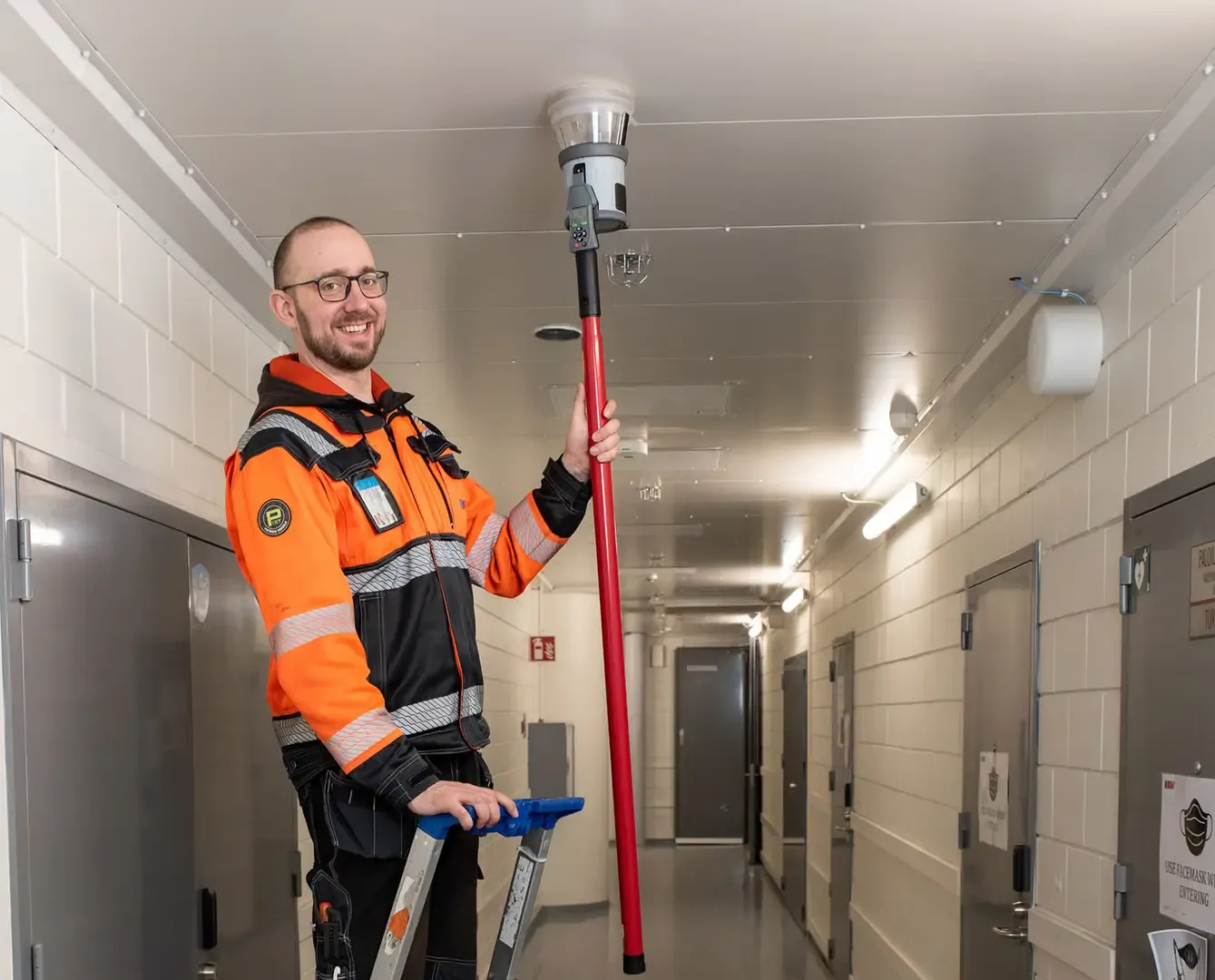
A smoke detector needs regular maintenance. Over time, dust and other airborne contaminants can build up in the detector and affect how it works. This can lead, for example, to more frequent unwanted fire alarms or reduced detection capability.
PAP Group offers maintenance services for fire alarm systems. During servicing, the condition of the detectors and the system’s event data are checked, along with the detectors’ contamination values where necessary. Detectors found to be dirty or otherwise unreliable are replaced in accordance with the manufacturer’s and the system’s maintenance instructions. In practice, cleaning alone is not enough to restore a detector to a reliable condition.
Maintenance, inspections and documentation of the fire alarm system are an essential part of managing a property’s fire safety. An up-to-date maintenance history makes both maintenance and the investigation of any faults easier.
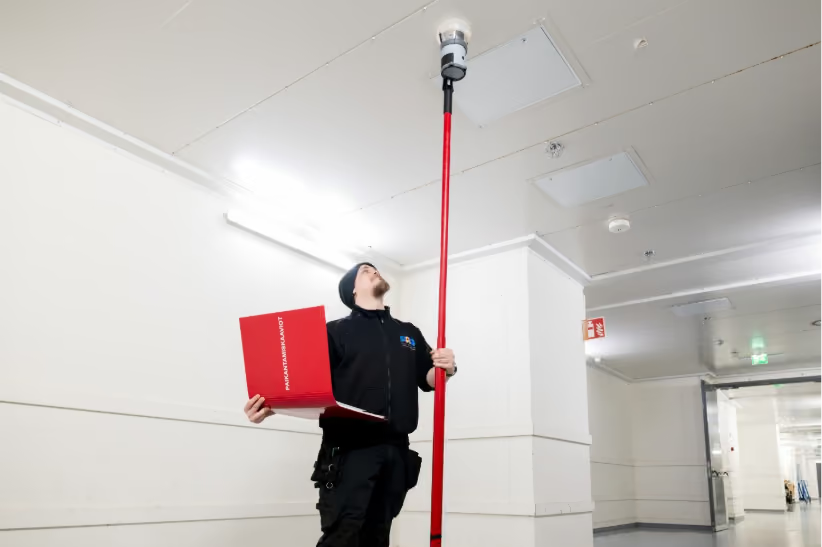
Regular testing and maintenance ensure that the system stays in working order.
Smoke detectors compared with other detection technologies
The smoke detector is a common type of detector, but it is not always the best option for every space. If smoke, steam, dust or fumes are produced in a space in normal use, alternatives such as a heat detector, multi-sensor detector, flame detector, linear heat detector or aspirating smoke detection system can be considered.
A heat detector responds to a rise in temperature, not to smoke. A flame detector, in turn, detects the radiation from a flame and is suited to certain sites where a fire may develop quickly. An aspirating smoke detection system can be a good solution, for example, at sites that need very early fire detection or where placing a conventional detector is difficult.
The best result is often achieved by combining different types of detector. Each space can then be protected according to its use and conditions.
The fire alarm system as a whole
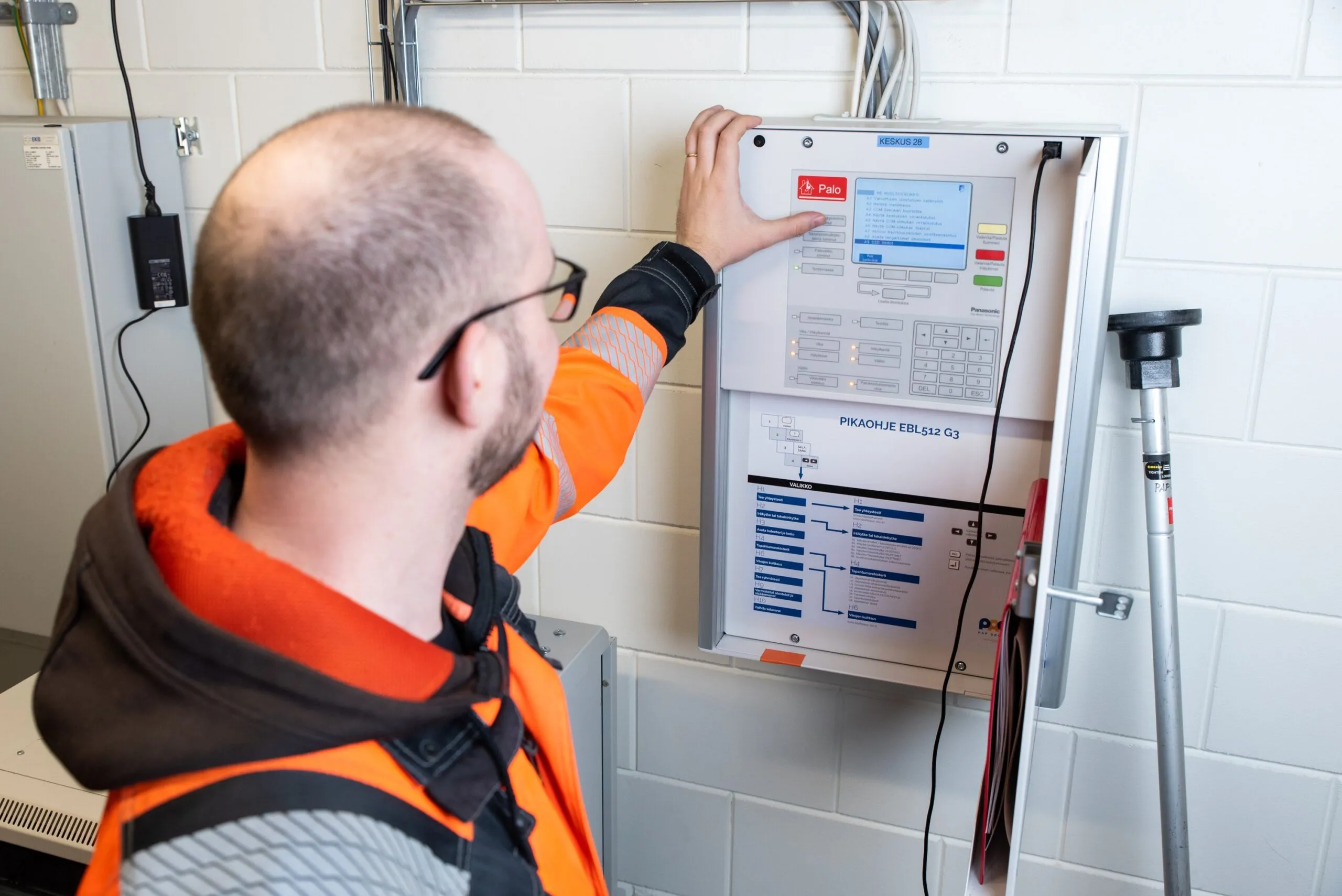
The smoke detector is one part of the fire alarm system. The fire alarm control panel receives information from the detectors, monitors the operation of the devices and triggers the programmed actions in the event of an alarm or a fault.
When a detector detects signs of fire, the information is passed to the fire alarm control panel. The panel can, for example, activate the fire bells, the voice alarm system and controls for smoke ventilation or fire doors, and forward the alarm in accordance with the requirements of the site.
A modern fire alarm system also produces information that is important for maintenance. The panel’s event log, fault warnings and device-specific data help to locate problems and ensure that the system stays in working order.
Responsibilities, regulations and documentation
Finnish rescue legislation sets precise requirements for fire safety. The Rescue Act 379/2011 requires the owner and occupier of a building to ensure that its fire safety is maintained at an appropriate level. The requirements for a fire alarm system are determined by the building’s intended use, the authorities’ requirements, the design plans and the applicable guidelines.
The design, installation, commissioning, inspections and maintenance of the system should be clearly documented. Good documentation helps to ensure that changes to the system, maintenance and any fault repairs can be traced later.
As the requirements are site-specific, it is worth using experts familiar with fire alarm systems for design and maintenance.
Expert help
A properly designed and maintained fire alarm system supports the safety of a building and helps to detect a fire at the earliest possible stage. The choice, placement and maintenance of smoke detectors are important details in this whole.
PAP Group’s experts help with the design, programming, commissioning and maintenance of fire alarm systems. Contact us if you want to make sure that the system at your site matches its intended use and current requirements.
Frequently asked questions
How often does a smoke detector need to be serviced?
The detectors in a fire alarm system are inspected and serviced in accordance with the system’s maintenance programme, the manufacturer’s instructions and the requirements of the site. Servicing assesses, among other things, the condition of the detectors, their contamination and any fault data. Read more about our TURVA maintenance services.
What is the difference between a smoke detector and a heat detector?
A smoke detector detects smoke, whereas a heat detector detects a rise in temperature or a temperature exceeding a threshold value. The choice is made on the basis of the use and conditions of the space.
Can a smoke detector cause an unwanted fire alarm?
Yes, it can. Typical causes include dust, steam, cigarette smoke, fumes, hot work, incorrect placement or a dirty detector. The right choice of device, careful placement and regular maintenance reduce the risk.
How is a smoke detector connected to a fire alarm system?
In an addressable system, the detector is connected to the loop of the fire alarm control panel. After installation, the device is programmed into the panel so that its location, address and behaviour in alarm and fault situations match the system. Read more about our TOIMI project services.
How many smoke detectors are needed?
The number depends on the building, the size of the spaces, the structures, the ventilation, the intended use and the risk assessment. That is why the number and placement of detectors are always determined in site-specific fire alarm system design. Design should be carried out by an expert familiar with designing fire alarm systems. Read more about our TUUMA design services.
Is the alarm automatically forwarded to the Emergency Response Centre?
A fire alarm system can be connected to the Emergency Response Centre or other monitoring if the requirements of the site and the implementation call for it. The implementation depends on the building, the authorities’ requirements and the system design. Read more about alarm transmission to the Emergency Response Centre.