PAP Group · · Fire safety · 11 min read
A comprehensive guide to alarm transmission in fire alarm systems
Automatic alarm transmission sends information about a fire to the Emergency Response Centre or a monitoring centre immediately, even if no one is in the building. This guide covers connection methods, requirements, testing and the most common problems.

Why alarm transmission matters for fire safety
A rapid response is the cornerstone of fire safety. Under section 3 of the Rescue Act (379/2011), anyone who discovers a fire and cannot put it out immediately is obliged to make an emergency call to the Emergency Response Centre (ERC) without delay. Automatic alarm transmission ensures that the rescue services are informed of a fire immediately, even if no one is present in the building.
Raising the alarm manually by phone takes time and requires someone to be present. An automatic system works around the clock, including at night and at weekends. This is particularly important in buildings where staff are rarely on site, such as warehouses, industrial premises or office buildings outside opening hours.
Alarm transmission does not only speed up the arrival of the rescue services. It also enables the building’s own staff or security guards to respond quickly. When information about a fire is passed on immediately, evacuation and first-aid firefighting can begin even before the rescue services arrive.
Technical methods of alarm transmission
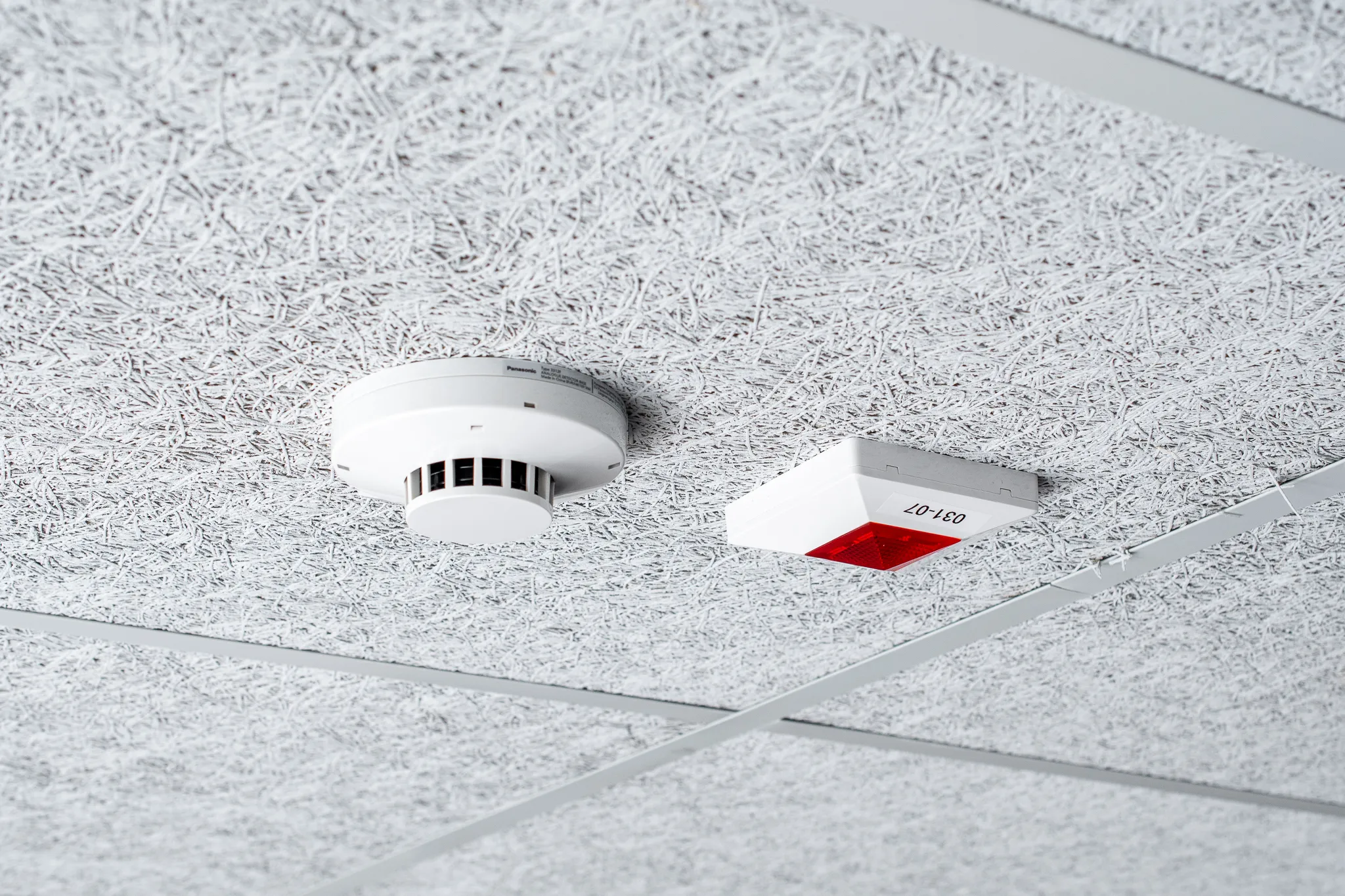
Modern fire alarm control panels, such as the Panasonic EBL512 G3 supplied by PAP Group, use several different connection methods to secure alarm transmission. The typical primary connection is a fixed data link, which provides fast and reliable data transmission. The backup connection is often the mobile network, which keeps the connection working even when there is a disruption in the fixed network. As an alternative to a fixed connection, a solution using two separate, mutually independent mobile connections can be used.
Redundancy is an essential part of alarm transmission. If the primary connection is lost, the system automatically switches to the backup connection. This ensures that the alarm gets through even if network problems occur. Modern fire alarm control panels continuously monitor the status of their connections and report any disruptions immediately.
Connection to the Emergency Response Centre and its requirements
A connection to the Emergency Response Centre is the most common form of alarm transmission in Finland. When a fire alarm system is connected to the ERC, the customer first makes an alarm transmission agreement with the operator of their choice and then submits a connection application in the ERC’s ILMO system.
Once the fire alarm control panel is connected to the ERC, every fire is automatically reported to the rescue services. The Emergency Response Centre receives the alarm, checks the site details and dispatches the rescue department.
Transmission to monitoring centres and other systems
Besides the ERC, alarms can be forwarded to other monitoring centres. Large buildings and industrial plants often have their own control room that receives alarms in real time. The staff working in the control room can respond immediately, check the situation and start the necessary actions.
The monitoring centres of security companies are another common destination for alarm transmission. Particularly in buildings without their own round-the-clock monitoring, a security company can provide a rapid response to fires. A guard can come to the site to check the situation and, if necessary, guide the rescue department to the site.
Alarms can also be integrated with other building automation systems. For example, automatic shutdown of ventilation, activation of smoke ventilation or closing of fire doors can be linked to the fire alarm system. This enables a controlled response in which all safety systems work together to bring the fire situation under control.
Legal requirements for alarm transmission
The EN 54 standard and the Rescue Act 379/2011 set clear requirements for fire alarm systems and alarm transmission. Under section 12 of the Rescue Act, fire detection and alarm devices must be kept in working order and appropriately maintained and inspected. The mere existence of a system is therefore not enough.
The Decree of the Ministry of the Environment on the Fire Safety of Buildings (848/2017) specifies in more detail which premises require equipment that gives early warning of a fire. These are dwellings, accommodation, care facilities, day-care centres and schools. Table 12 of the Decree sets out, according to the type of premises and number of places, whether a mains-powered smoke alarm is sufficient or whether a fire alarm system is needed, and whether it must be connected to the ERC. Where an ERC connection is required, alarm transmission to the ERC is mandatory.
Insurance companies also have their own requirements for alarm transmission. In many cases, the insurance requires an ERC connection or at least a connection to an approved monitoring centre. Failure to meet these requirements can lead to reduced insurance compensation or a refusal of compensation in the event of a fire.
Testing and maintenance of alarm transmission
An ERC connection requires regular testing, which is essential to ensure that alarm transmission is reliable. The fire alarm transmission link of a fire alarm system connected to the ERC is tested every month in what is known as the monthly test. The Decree of the Ministry of the Interior on Fire Alarm Systems and Automatic Fire Extinguishing Systems (976/2024) requires the holder of the system to arrange the monthly test and connection fault monitoring. The monthly connection tests are usually carried out by a trained fire alarm system custodian (paloilmoittimen hoitaja, the person designated by the site to look after the fire alarm system).
During testing, it is verified that the alarm leaves the fire alarm control panel, that it reaches the receiving party and that the recipient receives the correct site details. The backup connection must also be tested regularly. Testing is carefully documented so that the system’s functionality can be demonstrated in inspections by the authorities.
If a malfunction is detected in the alarm transmission link, the alarm transmission system generates a fault warning, which is routed to the alarm transmission operator or to a separately agreed connection fault monitoring service. These parties are responsible for initiating follow-up actions as agreed in the connection and monitoring agreements. The Emergency Response Centre is not responsible for the technical monitoring of transmission links; handling connection faults and providing information about them are covered by the agreement between the holder of the system and the service provider.
The most common problems and their solutions
Network problems are the most common cause of disruptions in alarm transmission. A break in the fixed network, poor mobile coverage or disruptions at the operator can prevent an alarm from getting through. This is why backup connections are so important. When the primary connection is lost, the backup connection automatically takes over data transmission.
Unwanted fire alarms can place a load on the alarm transmission system and cause unnecessary call-outs. Dirty detectors, construction work or incorrect detector settings can trigger unwanted fire alarms. PAP Group’s maintenance services regularly check the contamination values of detectors and replace dirty detectors with new ones, which significantly reduces the number of unwanted fire alarms.
Information security risks are a growing concern in systems with a network connection. Cyber threats can also target fire alarm systems, which is why data communication links must be properly protected. Encryption, firewalls and regular security updates are an essential part of a modern alarm transmission system.

PAP Group’s expertise in alarm transmission
PAP Group specialises in the design, commissioning and maintenance of fire alarm systems. Correct configuration of the fire alarm system is a critical part of every installation. Our trained technicians ensure that the systems work reliably with all the systems connected to them and that all the required standards are met.
In Finland, PAP Group mainly maintains Panasonic systems, but also systems from other manufacturers. Alarm transmission is always tested as part of maintenance, so that the overall reliability of the system can be confirmed. Regular maintenance prevents problems before they arise and keeps the system ready for operation at all times.
User training is an important part of the overall service. PAP Group provides training where needed, so that the building’s staff understand how alarm transmission works and how to act in different situations. Well-trained staff can respond quickly and correctly, which is vital for fire safety.
Practical tips for property owners
Make sure all contact details are up to date. If the people responsible for the property change or contact details change, update them immediately in the Emergency Response Centre’s ILMO system and with the alarm transmission operator or fault monitoring service providing the service, check the rescue department’s site card and also notify the fire alarm system’s maintenance company of the changed contact details. Out-of-date contact details can mean that critical information does not reach the right people at the right time.
Document all tests and the contact details used in alarm transmission. Keep a record of where alarms go, over which connection, and who is responsible for maintaining the system. This makes solving problems considerably easier and ensures that the information is retained when staff change.
Frequently asked questions about alarm transmission
Is alarm transmission to the Emergency Response Centre mandatory in all buildings?
Alarm transmission to the ERC is not mandatory in all buildings, but it is required where the building regulations or the conditions of the building permit require a fire alarm system connected to the ERC. Decree 848/2017 on the fire safety of buildings specifies the premises in which a fire alarm system, or one connected to the ERC, is required. Insurance companies may also make an ERC connection a condition of full insurance cover. Even where alarm transmission is not mandatory, it is often recommended to improve safety.
How quickly is an alarm passed on to the Emergency Response Centre?
In modern systems, an alarm reaches the Emergency Response Centre within a few seconds. The fire alarm control panel sends the alarm as soon as a detector senses signs of fire. The Emergency Response Centre operator checks the site and dispatches the rescue units. An automatic alarm is considerably faster than a manual call to the emergency number, especially when no one is present in the building.
What happens if the network connection is not available?
Modern alarm transmission connections always have a primary connection and a backup connection. As described above, the system automatically switches to the backup connection if the primary connection is lost. It continuously monitors the status of its connections and reports immediately if there are problems with the data links. The maintenance company can then respond quickly and fix the problem before it compromises safety.
Can alarms be forwarded to more than one monitoring centre at the same time?
Yes, they can. Alarms can be forwarded to several monitoring centres simultaneously. A typical arrangement is for the alarm to go both to the Emergency Response Centre and to the building’s own control room or a security company. This enables both the authorities and the building’s own staff to respond quickly. The system can also be programmed to send different types of alarm to different destinations. For example, local faults may go only to the maintenance company, while actual fires are forwarded to the Emergency Response Centre.
How often should alarm transmission be tested?
If the fire alarm transmits to the Emergency Response Centre or another monitored location, the link must be tested every month: the Ministry of the Interior Decree 976/2024 (section 9) requires the holder of the system to arrange the testing. Regular testing ensures that any problems are detected in time and fixed before they can compromise safety. Testing checks that both the primary and the backup connection work. All tests are carefully documented.
Does alarm transmission to the Emergency Response Centre cost anything?
The Emergency Response Centre Agency invoices for an alarm device connected to the ERC in accordance with the agreement. The total cost of alarm transmission is also affected by the chosen alarm transmission operator and the fault and alarm monitoring services. The rescue authority may also charge a fee if an ERC-connected fire alarm system repeatedly gives unwanted fire alarms.
PAP Group helps to design a cost-effective solution that meets the statutory requirements and provides reliable safety. Insurance companies may grant discounts when a building has an appropriate alarm transmission system.
See also: Alarm transmission as part of a fire alarm system and New AddView app now available.
Contact our experts
Implementing alarm transmission correctly requires in-depth expertise in fire alarm systems, data communications and legislation. PAP Group offers comprehensive expertise in all these areas. PAP Group helps to ensure that the alarm transmission of a fire alarm system works reliably both in everyday use and during disruptions. Our services cover the design, delivery and commissioning of the alarm transmission solution, arranging connection and fault monitoring together with the chosen operator, as well as testing and documentation in our TIETO Tallelokero service. Whether you are planning a new system or improving the reliability of an existing one, our experts will help you find the best solution for your property.
Contact PAP Group to discuss your property’s fire safety needs. We help to design, implement and maintain a reliable alarm transmission system that meets all requirements and provides peace of mind around the clock.
This article was produced as expert work by PAP Group with the help of artificial intelligence.