PAP Group · · Updated · Fire alarm systems · Fire safety · 4 min read
A well-maintained fire alarm system reduces fire damage
Early fire alarms reduce fire damage. An expert from SPEK explains why fire alarm system maintenance and site-specific training for the system custodian are important.

Source: SPEK
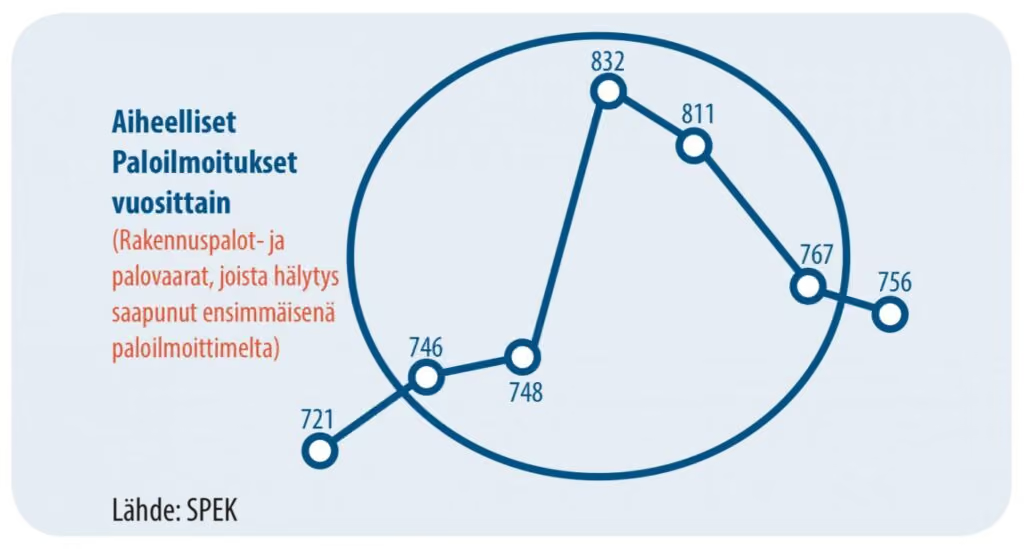
In 2016, automatic fire alarm systems reported a real building fire 800 times, in other words more than twice a day. Based on statistics compiled by the Emergency Services Academy Finland, early fire alarms are estimated to have prevented at least €16 million of damage in 2016.
Working fire alarm systems play a major role in detecting a fire and in providing the time needed to act, and they safeguard, for example, a company’s business continuity. On average, 15–18 minutes pass from the detection of a fire to the moment firefighters begin rescue and firefighting work. If a fire has time to develop far before it is detected by other means and firefighting and control measures begin, the damage can become considerably worse in that time.
– An automatic fire alarm system is a reliable means of raising the alarm. It detects a fire most reliably and is the first to pass on the information, says Lauri Lehto, safety expert at the Finnish National Rescue Association (SPEK).
The system has a particularly important role when a fire starts in a space where it is difficult for people to notice it. Such spaces include various cavities, electrical shafts, plant rooms and electrical cabinets. A maintained and working automatic fire alarm system gives time to act and to start first-aid firefighting safely and as early as possible.
Automation and people together make life safer
It is always worth remembering that whatever fire protection technology is installed at a site, no system can replace human action. Fire safety is a whole in which the equipment supports people and what they do. This also applies to fire alarm systems. Those involved in maintaining the systems should continuously develop their professional skills so that they can meet the requirements of changing conditions.
– The system custodian (laitteistovastaava, the person responsible for the system) must receive training and, in particular, site-specific induction. The aim is for the system custodian to be the expert on the system at that particular site. Servicing and maintaining the system, as well as planning actions and inducting and instructing others, are the system custodian’s core skills, Lauri Lehto emphasises.
The system custodian cannot manage the task alone. People who work or live at a site with a fire alarm system must be able to observe changes in their surroundings. A “fire safety team” supports the system custodian in observing the surroundings and in acting in different situations. In addition to the system custodian, the staff should therefore include enough other people who have sufficient induction in how the equipment works and what to do in a fire. It makes sense not to put all your eggs in one basket when it comes to fire safety.
– The systems provide safety and work every second, but the system custodian is not always available at the site at every moment, Lauri Lehto points out.
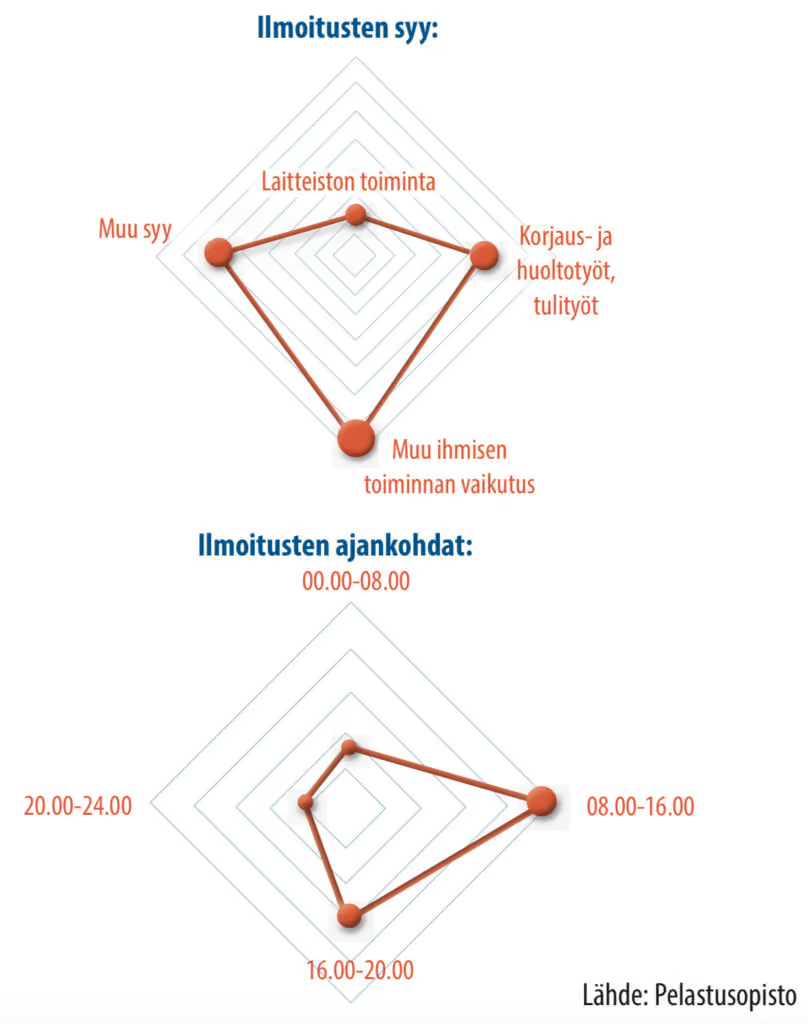
There is a lot of talk about systems that generate false, or unwanted, alarms. An estimated 22,000–24,000 systems connected to the Emergency Response Centre are currently in use. Alarms have been sent from about a third of these systems, either for a real fire or falsely. However, the number of systems generating alarms has decreased.
The devices are configured to suit their operating environment. In most cases, unwanted alarms occur because the necessary arrangements during renovation work at the property have not been made, or because the operating environment changes and human activity alters the conditions. Even in these situations, however, the system has worked correctly, that is, as it was configured to work.
After a false alarm, it is important to establish what happened and why. The causes that led to the situation must be reported so that unwanted alarms can be avoided in the future. In addition to the investigation carried out at the site, the rescue department’s report must be sufficiently thorough, especially in cases where the rescue department bills the site for a false alarm.
The fire protection technology development group (Palontorjuntatekniikan kehitysryhmä) reminds us that fire detection systems generate around 800 genuine alarms every year, and it is precisely for these situations that the systems exist. A fire detected as early as possible causes the least possible damage.
The fire protection technology development group is a group of experts whose members share the goal of promoting safety and developing the maintenance, quality and technical possibilities of fire protection technology. The group includes experts from the business world and from fire safety organisations.
See also: Automatic fire alarms saved €16 million in fire damage.
Further information:
SPEK: fire protection technology (in Finnish)
SPEK fact sheet: Fire alarm system custodian
Lauri Lehto, safety expert, Finnish National Rescue Association (SPEK)